“Creativity will always be our biggest enemy”: Failure of Hindi Movies

How many of you remember the first time when you smiled at any “Raja & Rani” story narrated by your grandparents? If you remember one story, there is a minimum chance you can recall the other stories which revolved around “Raja” and “Rani” that followed. It is because your smile faded; you grinned, simpered and then smirked when you finally realised they don’t have anything new to share at the moment. And then they had to change… Never did they think that they could make us broadly smile the second time by telling us something new? Contrary to what they say, they were not just afraid we won’t laugh, they were reluctant to dream.

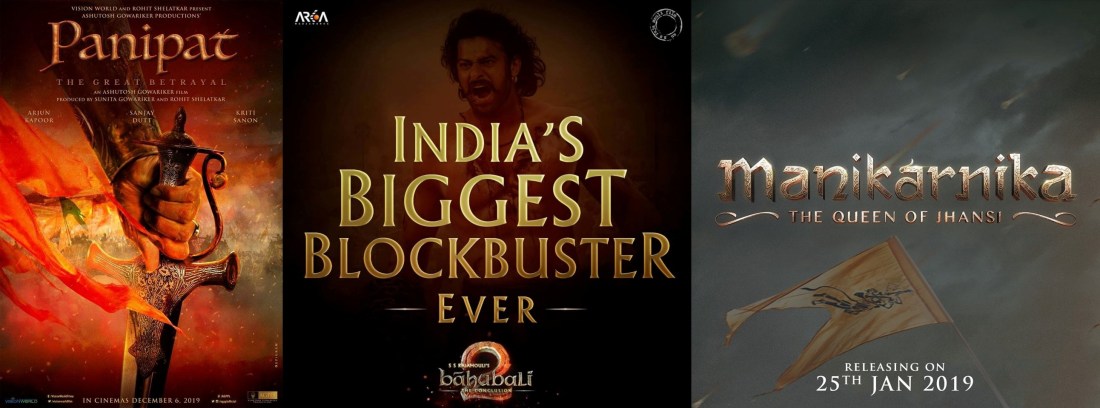
A few months earlier, journalists were in a mood to ask every director and actor, that how we cannot make “Avengers Infinity war” in India. They were curious with the box office collections of the film. The answers varied from ‘production’, ‘budget’, ‘scale’, ‘distribution’ and every statement that couldn’t end with the word ‘imagination’. A creation named “Baahubali” recently shook the country away. But how is it that, in response to why it did, I am only hearing and reading words mentioned above (mostly scale)?.. How are they eventually in line up to make 10 war movies based on real events in history in the next 3 years? A simple exception can be made for the movies based on the great “Battle of saragharhi“, because it was not in any history books I read. But why do they expect a women I read poems about, who was in every chapter of every ‘1857 revolt’ book I read, will force me to pay Rs 600 to hear her story from a ‘voice over’ I hear whenever I read or watch history?.. The real question is: how could we, the intellectuals of cinema, confuse dreams with scale?..The answers will have to take us just a few decades back in Hindi cinema history.
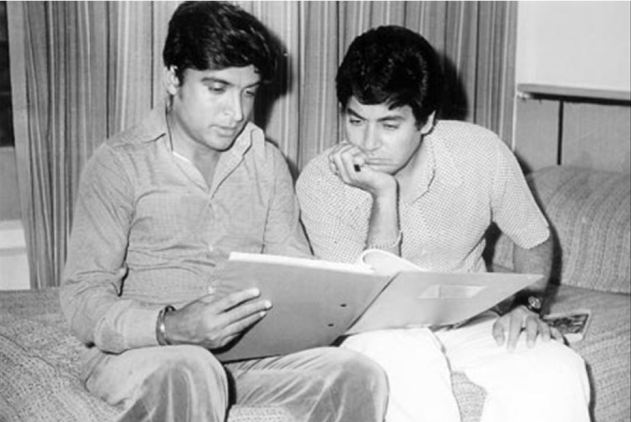
salim javed 1
Image courtesy: Zee classic

Every time a movie breaks a record, the inquisition has gone beyond a simple answer to it, that it was a good dream. A “sholay” influences almost every producer to practically force writers and directors to follow the sacred footsteps of Salim-Javed. Don’t they know, it is sacred because they have the ability to embrace their own uniqueness. Oh right term! I just got the news that we are no longer good at one thing we could easily be proud of, songs for the narrative and just for it. I was just told we are now ashamed of it. I heard it from the songs themselves, that they are the background noise of marketing. They said “Aapke ehsaan ki mujhe jarurat nahi hai, meri aap ko hai”.. It just required a few years and the curse 80s did to mainstream movies to get back on track. Not for long though. Unlike your suspicion, I did not forget the various ‘almost’ remakes of 1995 hit film “Dilwale dulhania le jayenge” where dulhans were never easy to be eloped, or where there always was a brother or a father resisting the blissful (boring after 1995) union. If I can skip all these “bhed chaal” events to 2013, where a hit biopic “Bhaag Milkha Bhaag”, sweeping all the awards, gives birth to 50 (roughly because there are so many) biopics in the next 5 years. But does it only speak about the trend, the “bhed chaal”, when I use the word “biopic” or does it say that we finally have the reason behind it?..
true story

Story. As simple the word sounds, the level of scarcity is the same. And when the scarcity of people in the dark room, where they open their eyes, is talked about, the word “footfalls” is used more than what they come to see, “dreams”… When the “crisis of 2017” was discussed everywhere, writing was on the wall and writers were not empowered. As true as it is, I felt that was the only thing stable. I say that because, even plots of a boy and a girl, meeting at humour and thinking, that they can marry at catharsis, rocked at the box office. Well, at least more than the others. Ronnie Screwvala said on the “producer’s adda”, conducted by Anupama Chopra “We have dreamers, we have merchants but we need dream merchants”. Clearly Sir, the numbers for latter is far more than the former. Because except Bahubali, I never felt I closed my eyes when I opened them in the dark room. Or I never woke from my sleep the same way I do from a good dream in the middle of the night, where I struggle to get back to sleep with the hope to see the same dream again, after I saw “Intermission”. Unlike my reality, they had the ability to get me back to the same dream. They failed because I was never excited to get back and watch people I can see in my “mohallas” or my office. I never wanted to pay this much money to see titles of the dream like “Reality weds humour”… This year and the few years to come, look like we want to surround ourselves mainly on posters that’ll say “Based on real events”. If you don’t believe me, take the posters in your hands and count.

If you need 10 staircases to reach where you want, you can’t keep tapping your shoes on the same staircase, you would like to take the next step. So, answering the questions of those journalists, if my grandmother stopped “Raja and Rani” the next time instead of eventually the 10th time when she narrated me a story, odds say that it wouldn’t have taken 10 stories for me to smile. Obviously not. I remember when I wanted to watch Bahubali the second time, I failed to get tickets for a Thursday show on a Monday. I still keep imagining if another story that had the same impact released the very next friday, how many screens would’ve increased, just to satisfy people’s needs?..Will it not increase the ‘production’ values or the ‘scale’, if ‘distribution’ is able to bring so much money. Now, what if, after a few(or 1 or 2) movies that work, when the same amount of money is practically given to scale or a set of history movies, they fail to bring people after the sunday holiday. Would you blame the ‘scale’ then? Or would you then try to finally understand the power of dreams that the dark room demands?..Because believe it or not, it demands…It demands your closed eye dreams…
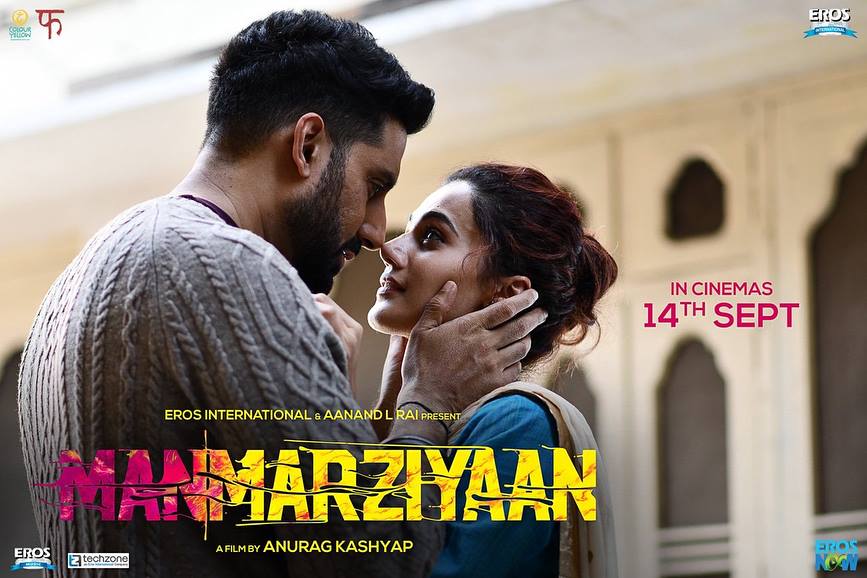
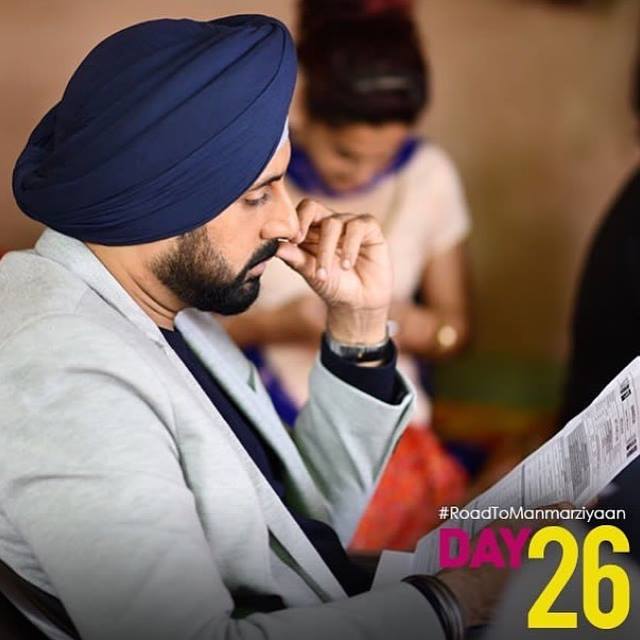


Criticisms of Manmarziyaan: Someone’s “false pride” and someone else suffers.

It’s been long that I spoke my mind like this for something. But I am reading about movie scenes, that are manifestation of reality, are edited out and it makes me cynical as a Sikh(sorry to use name of a religion as a prefix to a term that is free from it) Artist to see values of my faith are named the reason for it.

Manmarziyaan is a good film for me and not more or less than that. This message is mainly to certain people, calling themselves ‘Sikh’ individuals, who were criticising the film, because a character was smoking and a turbaned character was drinking and few other stupid reasons. I am a Sikh and I don’t smoke and drink. But obviously, I don’t have any problems with what was shown because it’s real. It is no question of admission, if there are people wearing turban who drink or a member of Sikh family smokes. Robbie is a character and not a hero that your child might mimic. I strongly preach against drinking and smoking to my fellow sikhs and I did not notice it. Why should anyone? I was watching a scene that’s happening in Amritsar’s terrace. Now look out any night and tell me if you won’t find someone smoking in that holy city. You spoke about a girl’s desires. So where are you, when hundreds of Sikh girls marry the boy their parents choose for her and she is in love with someone else. Did you then forget that your faith celebrates love?

Before I make my point for which I wrote this, let me be honest and tell you how or when before, I was mildly or deeply bothered by some of representation of Sikh characters in celluloid. It hurts. It genuinely hurts when a non Sikh Actor is made Sikh to be a Joker. It hurts when actors like Vir das and Boman Irani plays Santa and Banta. The jokes we fought hard against. Jokes that hurt. There are many such example in different films. It’s offensive and hurtful when people find it funny. It affects mildly, when in a movie, an old Sikh is lying and begging to feed his wife in the hotel that his wife is in the hospital in critical condition. It does come in my attention, when a Sikh is laying on the floor while others are just praying to the idol, when it’s written at many places in our scripture, to not pray an idol, but only one who is inside you and everywhere. You forget some of them because it is unintentional. But in all these years, we were jokers or heroes (only in the army or a sports biopic)…But believe me this doesn’t hurt as much because of you.

Some of it might hurt but what hurts the most is because of you, no one can make something to counter it. Not anymore, when even making a story about a great sikh, you might argue that they didn’t make him Sikh enough. You might play against the language they use. You might play against the person playing the character. You might play against the distortion of history. Are you happy with the representation now?

40803372_1104263879729358_208741101417267200_n
Photo Credits: Khamka PhotoArtist

So when someone shows a reality, honour it before you spoil something big. If someone shows, expresses the beauty of punjab by a Gurudwara, Anand Karaj or poetry of Amrita Pritam, don’t say ‘No’ for their next time. You might not but I urge to see those visuals and hear those poems again. The truth that is painful is you can’t accept a social evil because Guru Nanak taught you to fight it and you can’t. So you fight someone addressing the evil. Here, I am not talking about Manmarziyaan. I am talking about an expression that tells you that you are attention seekers, you are playing a pure faith’s name to get something our Guru calls “Jhute maan”(False pride). So stop and fight the evil within before it’s too late.

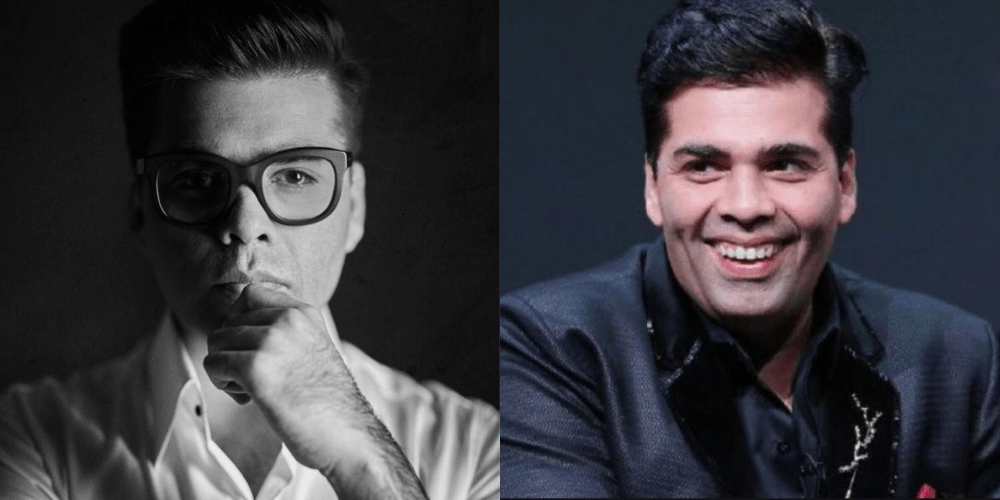
Karan Johar: An imperfect marriage of joy and sadness


karann
Image courtesy: Instagram

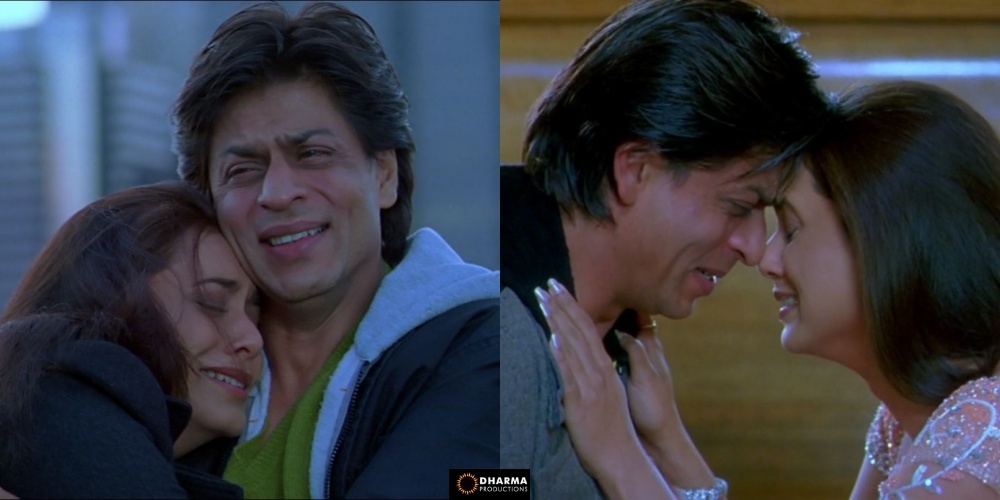
I was not sure at first, when few days back, I began rewatching Kuch kuch hota hai, the first film of one of the most successful commercial filmmaker of this time, that he is the same person who takes 50 minutes of just nonsense fun in his recent film Ae dil hai mushkil to build and dive deep. Precisely, when Alizeh tucks her hand into Ayan’s and he says “you really like me na?”, following an incredibly beautiful scene that has the famous dialogue “Pyaar mein junoon hai, par dosti mein sukoon hai”… Then the next time he has fun is when he dances at her wedding; not exactly fun. I say I felt he is not the same because, after patiently watching the opening credits scene with a happy-sad background score, I saw Rahul crying at the funeral with flashbacks of again sadly toned happy moments of him and his wife Tina . Then follows the 8th letter flashback of fun in college, pain of separation and bliss of reuniting with the love of his life, Anjali. So as I finished, he is really the same. Someone who has never escaped from sadness and will never freely fly in the air of joy.

Today, he is one of the only few I admire in this industry, because he is never ashamed of songs but lately, they are integral to his narrative. As for many directors in the industry, they are not the background noise of marketing (except for couple of his produced films). And when “ladki badi anjaani hai”, a song where Rahul and Anjali are teasing and loving each other, was not fast forwarded in the film or my sister didn’t change the channel, I could see the marriage. The whistle blends to a beautiful score or the stanza swiftly turns the joy of chorus as the words “paas reh ke bhi thi doori…” are sung.  Both music and lyrics of the song organically oscillate between joy and sadness that results something that you really forget she was friendzoned or any faults for that matter. I don’t pretend to find logic or admirable, intelligent cinematic moments when I take a nostalgic trip to these movies, but it still amazes me how could we never change the TV channel, when we had already endured the cheesiness for so long or have known the faults?..Because never did we question the logic in dreams, did we?

That is when I think of kal ho na ho, a film written by Karan that he gave Nikhil Advani to direct. He has often said in his interviews, it was an envy to coolness of Farhan Akhtar’s Dil chahta hai that gave birth to the film. It does surprise me then, what happens when he starts writing a film about cool characters, that it turns out to a soulful experience where every heartbeat is heard till death. Or what happens when expression  of love stationed around infidelity is influenced by glamour and dancing of characters. So, the irony is, his best screenplay to this date, “Kabhi Alvida na kehna”,  has 40 minutes that doesn’t seem to belong to the characters, though not far from the story. He says he regrets it and might make it again if he gets the chance, removing the item songs and reducing the number of characters, which might be fair to the story. But I believe, not to the heart that couldn’t escape joy.

karan-tile final.JPG

When people say they can’t believe Karan made My name is Khan, my mind questions why can’t they say the same for Student of the year. Two diametrically opposite films of his career, that could be much different without this marriage. People have argued, watching the mind-blowing opening credit sequence of My name is Khan, ending with a dialogue of the titlethat it would be a much better and honest film if post 9/11 traumas were more focused than the love story.  Neither honest eventually nor better. Or Student of the year is more fun for high school kids if the relationship complexities were just eradicated from the film. Well fun, might be…But then, will they watch it on TV while having dinner? Certainly not. Because they won’t revisit the story for what it made them feel as we(I) go back to Kuch kuch hota hai.

Every feature film made by any director connects chords with other films they direct. The stories may entirely change its scale and expression but they never cease the magic they begin with. I believe the colours of his first film are still visible in every film he directs. In some, like K3G and Student of the year, the glass is transparent but others open the opaque doors only when the characters speak, through their eyes or tongue, of love or friendship. And they definitely do, in all his films. So, when he describes his next film “Takht” as K3G of mughal era with more betrayal, where will the sadness or joy derive from?.. The unpredictability of what he will do with a story of warring brothers excites me.

I, like many other “lovers of cinema”, couldn’t admit to myself and others that I am a big fan of Karan Johar. Instead, it was always that he makes good or beautiful movies and nothing more than that. Now, when I reminisce the childhood I had or they must’ve had, and remove his movies from it, a small void in filled places tells me that he made us more happy than many we claim to be big fans of. So should I say he did not get his due? Well there is a 27000 sq. ft office to completely decline that. But when his name comes in the name of overrated directors, I remember the words said by Neal Sampat on “The Newsroom” for writing about movies “Why overrated, why not underrated?”..